Jul 7, 2026 · 7 min read
Triathlon Heat Pacing: How to Adjust Your Race Plan When It's Hot
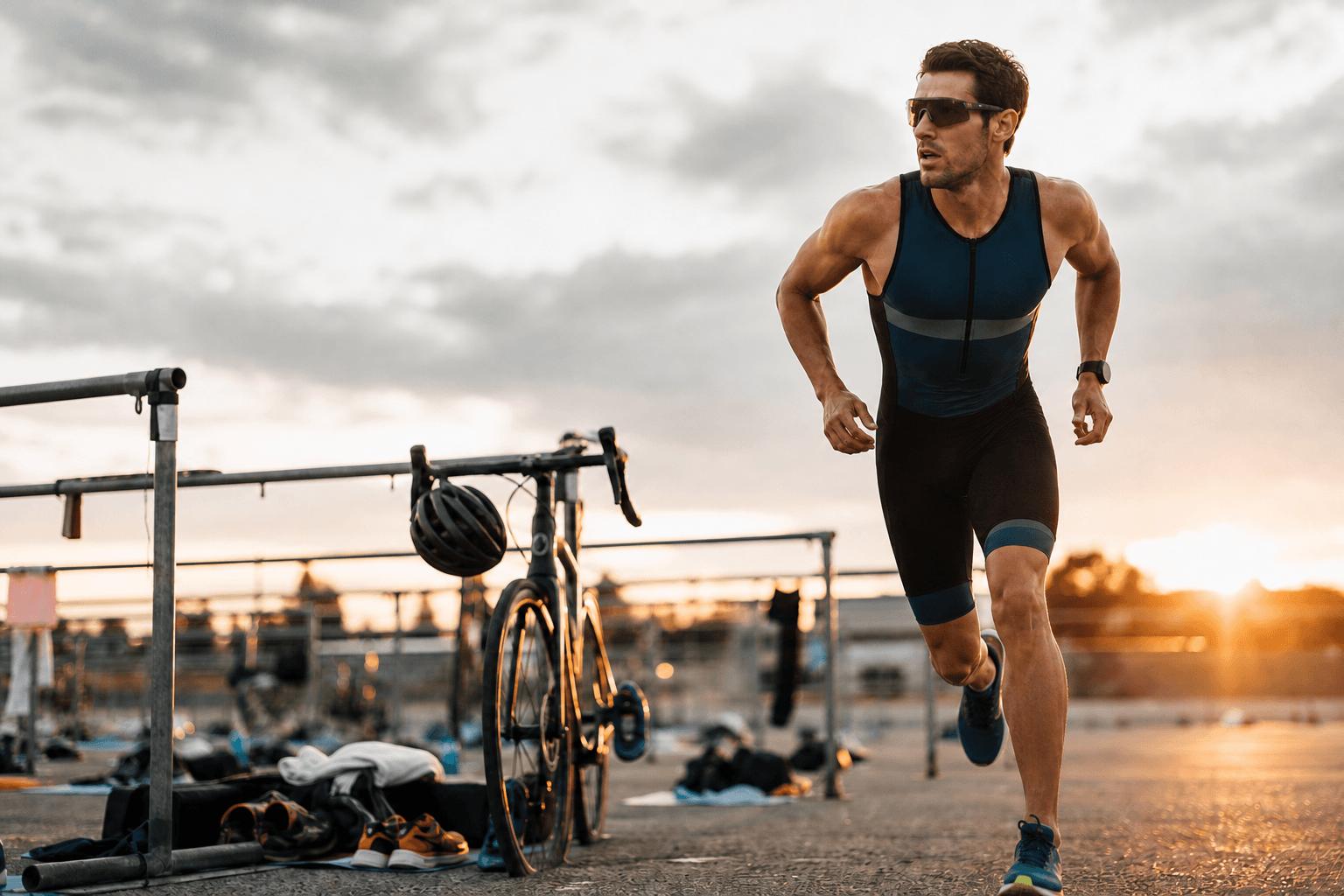
You rack your bike in transition. The sun is already up. The air feels thick before you take your first running step.
That first kilometre can lie to you. Your legs feel okay. Your triathlon heat pacing plan says hold back anyway. The watts that felt fine on a cool April ride can bury you by kilometre 10 when humidity is high and the course has no shade.
Hot-weather triathlon pacing means backing off power and pace on purpose. Use heart rate and RPE (rate of perceived exertion) as your main guides, not the targets you nailed in spring. Eat and drink on the clock. Cool your body before you're desperate. That's how age-groupers finish strong instead of surviving the last 5K.
Why Does Heat Change Your Triathlon Pacing?
Heat taxes you on every leg. Your heart sends more blood to your skin for cooling, so heart rate runs roughly 5–15 beats per minute higher for the same power or pace. You sweat more. Core temperature climbs faster. Glycogen burns faster too.
On the swim, a hard start still spikes HR before you touch the bike. Seed yourself honestly in the pack. Treat the first 200–400 metres as a warm-up, not a sprint. Smooth strokes. Controlled breathing. If panic hits, roll to your back for 10 seconds and breathe.
I see athletes chase cool-weather FTP (functional threshold power) on a 32°C bike leg every summer. The numbers look fine for 40 minutes. Then the run turns into a shuffle they never trained for. Athletes who pace well in heat accept lower output at the same internal effort. They plan for that before the gun goes off.
How Much Should You Slow Down in the Heat?
No single formula works for every body. These ranges are a solid starting point for age-group triathletes racing in hot weather.
- Bike power. Cut your target by roughly 3–5% for every 5°C above the conditions you trained in. If you did most threshold work at 18°C and race day is 30°C, a 75% FTP target might need to become 68–72% FTP on a flat course.
- By distance. Sprint races average around 85–90% FTP. Olympic at 80–85%. 70.3 at 70–78%, minus another 3–5% when it's genuinely hot. Full distance around 65–72%, with the same heat trim on top.
- Heart rate and RPE. Treat HR as your ceiling, not power. If your aerobic threshold is normally 155 bpm in cool weather, expect 160–168 bpm at the same sustainable effort in heat. On a 1–10 scale, your all-day bike effort in heat should feel like 6–6.5 out of 10 for 70.3, not the 7–8 you might hold in spring.
- Run pace. Add 15–45 seconds per kilometre to your goal triathlon run pace, depending on distance and humidity. If the bike already feels like RPE 8 in the first hour, you're racing the forecast, not the course in front of you.
How Should You Pace the Bike in a Hot Triathlon?
Most run blow-ups in hot races start on the bike. Fresh legs and cheering crowds invite the ego surge. Ten watts here. A climb at 110% FTP there. In cool weather you might absorb that. In heat you pay for it all afternoon.
Cap climbs at roughly 105–110% of your adjusted target, not your spring FTP test. On descents, ease off and drink. Speed downhill does not cool your core. It only delays the moment you overheat.
One-quarter of the way through the bike, check average power and HR against your heat-adjusted plan. If you're above target, dial back immediately. Don't wait until your quads cramp at kilometre 70.
Start eating within the first 15–20 minutes of the bike, before you feel hungry. Aim for 60–90 grams of carbohydrate per hour and 500–750 ml of fluid per hour, adjusted for sweat rate. Set a watch alert every 15–20 minutes for gel, chews, or sports drink. A nutrition plan built for a cool April century will leave you short in August.
How Should You Pace the Run in Heat?
Cycling legs lie to you. The first kilometre off the bike can feel almost easy. Until it isn't. Check your pace at 200 metres. If you're ahead of plan, slow down on purpose.
For Olympic distance, start 20–40 seconds per kilometre slower than standalone 10K pace for the first 2–3 km. For 70.3, think 15–30 seconds per km slower than fresh half-marathon pace for the first 5–7 km.
Walk the first 30–60 seconds out of T2 if that helps you settle heart rate. I've seen more time lost to a heat-induced walk at kilometre 18 than ever lost to a calm first minute in transition. That's fine. You're buying a run you can actually finish.
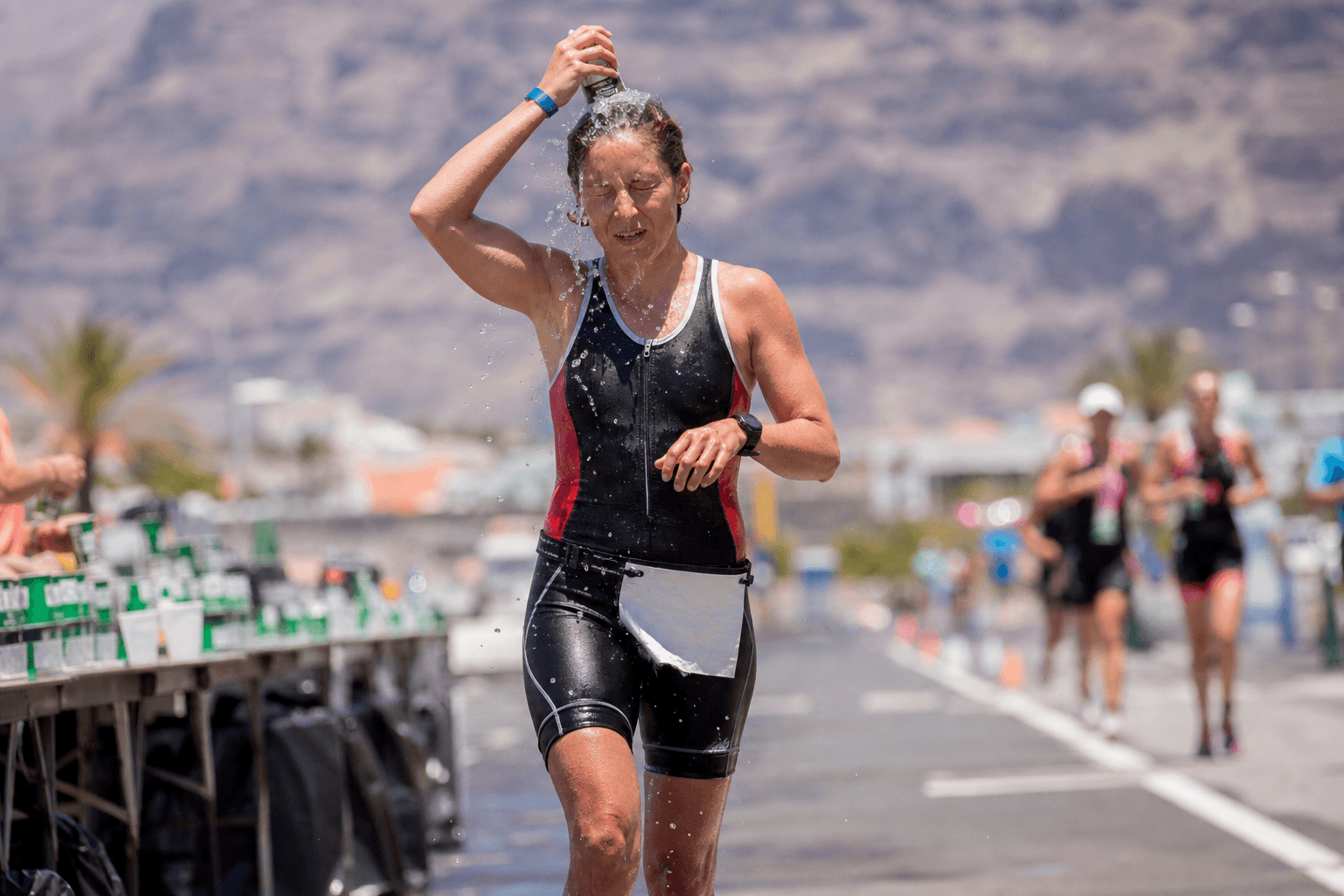
Pour water over your head and neck at aid stations. Grab ice when you can. Stuff it in your suit or hat on the run. Seek shade and sip cold fluids in the 30–60 minutes before your wave if the venue allows it. A 15-second walk through an aid station while you cool down beats a forced walk at kilometre 19 because you refused to adjust pace at kilometre 3.
How Do You Prepare for a Hot Triathlon Race?
Wear light-coloured tri kit you've trained in, not something new from the expo. A vented helmet and sunglasses you trust in bright sun matter on a long hot day.
You can't fully simulate race-day heat in a climate-controlled basement. Two or three easy heat-exposure sessions per week in the final month can help sweat response and plasma volume. Easy outdoor rides. Sauna after training. Shorter hot runs. Stop hard heat work five to seven days out so you arrive adapted, not fried.
If the venue is a surprise, lean on RPE and HR, increase fluid and sodium, and accept a slower finish time. A controlled sub-par time beats a DNF you'll replay for months.
Write your heat-adjusted power, HR ceiling, and nutrition intervals on your stem or watch the night before. Decision fatigue on race morning is real. When the forecast doesn't match the plan you built in March, tools like RacePal can help you adjust race prep instead of clinging to numbers that only made sense in cooler weather.
What Should You Do in Transition on a Hot Race Day?
T1 and T2 are not rest. They're where small mistakes compound in hot weather. Don't sprint through transition because the clock is ticking. Move steadily. Load nutrition into your pockets before you leave T1 so you're not fumbling at kilometre 15.
On the run, grab ice and fluid at the first aid station even if you feel fine. In heat, "fine" at kilometre 3 often means "in trouble" at kilometre 12.
FAQ
Should I use power or heart rate to pace a hot triathlon?
Use heart rate and RPE as your primary guides, with power as a secondary check. If power says you're on target but heart rate is 10 beats high and you feel strained, trust the physiology and back off.
How hot is too hot to hit my normal race targets?
Once air temperature is roughly 10°C or more above what you trained in, especially with high humidity, assume sustainable power and pace drop 5–10%. Many athletes need larger adjustments above 28–30°C.
Can I still negative-split the run in hot weather?
Yes, if you were conservative early. Starting slower than goal pace and building after halfway still works. A negative split in heat usually means you paced the bike correctly, not that you held cool-weather targets all day.
How much should I drink per hour in a hot triathlon?
Most age-groupers need 500–750 ml of fluid per hour on the bike and run in heat, plus 60–90 grams of carbohydrate per hour. Heavy sweaters may need more. Weigh yourself before and after a hot training session to estimate your sweat rate instead of guessing on race day.
Should I pace the swim differently when it's hot?
Yes. Start easier than you think you need to. A hard swim spikes heart rate before the bike and burns matches you'll need later. Smooth, controlled strokes in the first 200–400 metres beat a fast start that leaves you gasping in transition.