Nov 24, 2026 · 8 min de lectura
Triathlon Swim Start: Stop Racing the First 200 Metres
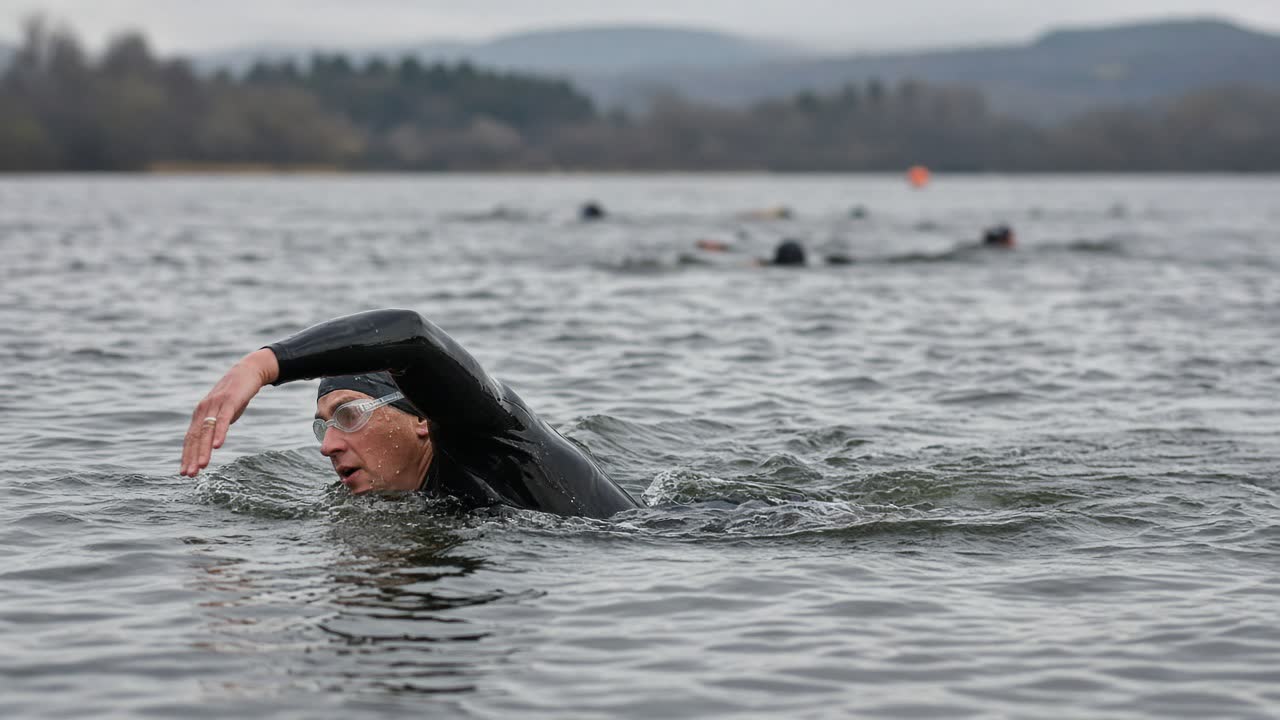
The horn goes and your triathlon swim start turns into elbows. A hand clips your cap. You dolphin-kick twice, swallow a mouthful, and decide the fix is to swim harder than the person on your hip. Eighty metres later the goggles are half full and the stroke is a slap.
Stop racing the first 200 metres. The fast part of a triathlon swim start is a short burst into clear water, then a held-back first third. Tim Crowley, a USA Triathlon Level III coach, put it this way in April 2022. Be ready to start fast enough to find space. Accelerate for 10 to 20 strokes out of each turn. Hold the first third back about 5 percent, and swim the last third about 5 percent harder. He is chasing a fast, even split. He is not asking you to win the beach.
Slaughter's picture is the crowded beach start. Someone treats the first buoy like a prize. Heart rate spikes. Breathing goes ragged. By the second buoy they are the swimmer everyone else is going around.
Why the first 200 metres feels like a race
You'd never open a long bike or a long run at top speed. In the water, the pack makes that obvious rule feel optional. Erica Slaughter, writing for U.S. Masters Swimming, describes the mess plainly. In a big in-water start the silence breaks, elbows fly, and plenty of people hit a wall after about 100 metres of that fight. The technique you drilled all winter is already gone.
Her numbers are a suppose-that, not a lab result, and she says so. Take an open-water pace of 1:30 per 100 metres. Some athletes blast the start at 1:15. They then slide to around 1:45 for the next two or three hundreds. A swimmer who simply held 1:30 is level with that pack again by about 200 metres, and still has a stroke.
She also doubts that anyone holds a truly hard anaerobic blast for more than about 50 metres. That is the whole trick. The sprint you think you are losing lasts less than a length of a short-course pool. After that, the people who charged are the people you are swimming with anyway.
Heavy. Clumsy. Then the water goes quiet, and the easy energy is already gone.
How fast should the first third of a triathlon swim be?
Crowley's 5 percent is a coaching rule of thumb, not a constant somebody measured in a flume. Use it as a feel. You won't see a clean 100-metre split in a choppy lake. If your honest race effort is a smooth 1:40 per 100 in the pool, the opening third should feel a shade easier than that. A shade. Not a survival swim, and not the pace you use when someone taps your toes.
The 10 to 20 stroke acceleration is the part that gets lost when a coach says go out easy. You still want clear water. Crowley says be prepared to start fast to get there, then settle. Same move off a turn buoy. Ten to twenty hard strokes so you are not stuck in the wash, then back to the held-back rhythm. Dan Bullock, writing in 220 Triathlon back in 2016, asks for the same gear change in the pool. You need a faster gear. You also need to know how to drop out of it. He says pretty much every beginner he watches stays in the fast gear, because they have never practised the drop.
I'd rather give away a few seconds before the first buoy than spend the first 20 minutes of the bike waiting for my heart rate to come down. Slaughter is blunt about the trade. Your swim split might not get faster. It might even get a little slower. You show up to the bike with something left, which is the point if the bike or the run is your better sport. The flat-road version of this same impatience is a different problem, already covered in flat triathlon bike pacing. Empty the tank in the water and that calm heart-rate trap on the bike gets worse.
If your breathing locks up, slow down. Breaststroke for three breaths if you need the buoy. That's fine. A swimmer who is breathing beats a swimmer who is bargaining with their goggles. If it climbs past a rough patch, roll to your back and use the safety crew. TRI247's September 2026 start guide says the boring version of the same fix. Exhale underwater. Breathe as many times as you need. When breathing gets hard, take the effort down instead of muscling through it.
Where should you stand at an open water swim start?
Seed yourself with the pace you mean to hold, not with the pace you hope you have on the day. Slaughter's line is to pick a spot on purpose. Front and centre if you really do swim at the front. Outside, or further back, if you don't. She prefers the outside edge of the rear to the inside of it, because the surge toward the first buoy piles bodies onto the shortest line.
The U.S. Masters Swimming triathlon guide has the anxious-swimmer version. Start off to the side, or give the field a few seconds, so nobody is climbing on you while you find a stroke. TRI247 says a slightly wider line can add a little distance and still be the quicker swim if it keeps you calm. Don't line up beside people who are clearly faster. They'll swim over you, and your breathing will go with them.
Check the start type the night before. A mass start, a wave, a rolling self-seed, a beach run-in, a deep-water tread, or a dive off a pontoon. They feel different, and the athlete guide will tell you which one you drew. Find the first buoy before you get in. A turn is not finished until you have sighted the next buoy. That is where Triathlete's first-timer piece says people swim off into the lake together, sure they are right. Their cue is a sight every 6 to 10 strokes. On a grey morning I'd rather see the buoy late than follow a stranger's cap into the wrong bay.
A pool set that teaches the settle
You can't invent this feel on race morning. Bullock's plain version is negative-split 200s. Swim 8 x 200 and make the second 100 about 10 seconds quicker than the first. The first 100 is the rehearsal. Smooth, almost polite. Then you add speed once the stroke is yours.
Crowley's race-start set is shorter. Try one of these, with the rest he wrote down.
- 10 to 20 x 25 fast, with about 30 seconds rest. The fast length is the easy part to fake. The skill is swimming the next length like a normal person.
- 4 x 200 as 25 cruise, 25 fast, resting about 30 seconds. If you finish every rep gassed, you practised the mistake.
One of those sets in the last month is enough if the rest of your swimming is already honest. Park it on a swim day and let the day move when work or a bad night wrecks the plan. That is the useful bit of an adaptive coach like RacePal. The session can still sit on Thursday if Wednesday vanished. It doesn't need a speech about your goals.
This falls apart if you have not been in open water at all. A pool negative split won't teach you a beach run-in, a wetsuit that floods at the neck, or the sound of a kick on your hip. Get one supervised open-water start in before race week, even if it is three friends running in from a shore. If the venue bans a warm-up, you won't get that first face-in-the-water breath on race morning. You want it to have happened already.
Questions athletes ask about the triathlon swim start
Should you sprint the start of a triathlon swim?
Sprint only long enough to reach clear water. Crowley puts that burst at the opening, and again for 10 to 20 strokes off each turn. After that, hold the first third about 5 percent under the pace you can actually sustain. Racing the first 200 metres is how a 1:15 start becomes a 1:45 slog, in Slaughter's illustration.
Where should a slower swimmer line up?
To the side, or a row back from the fastest people in your wave. A wider line can add a few metres. It also keeps you out of the pile aimed straight at the first buoy. Seed with people who will swim about your speed.
What if you can't breathe in the first minute?
Ease off and exhale underwater. Three strokes of breaststroke to spot the buoy are allowed. If the panic keeps climbing, roll onto your back, signal, and use the safety crew. The bike will still be racked when you get there.