Nov 3, 2026 · 8 min de lectura
Flat Triathlon Bike Pacing: When a Calm Heart Rate Lies
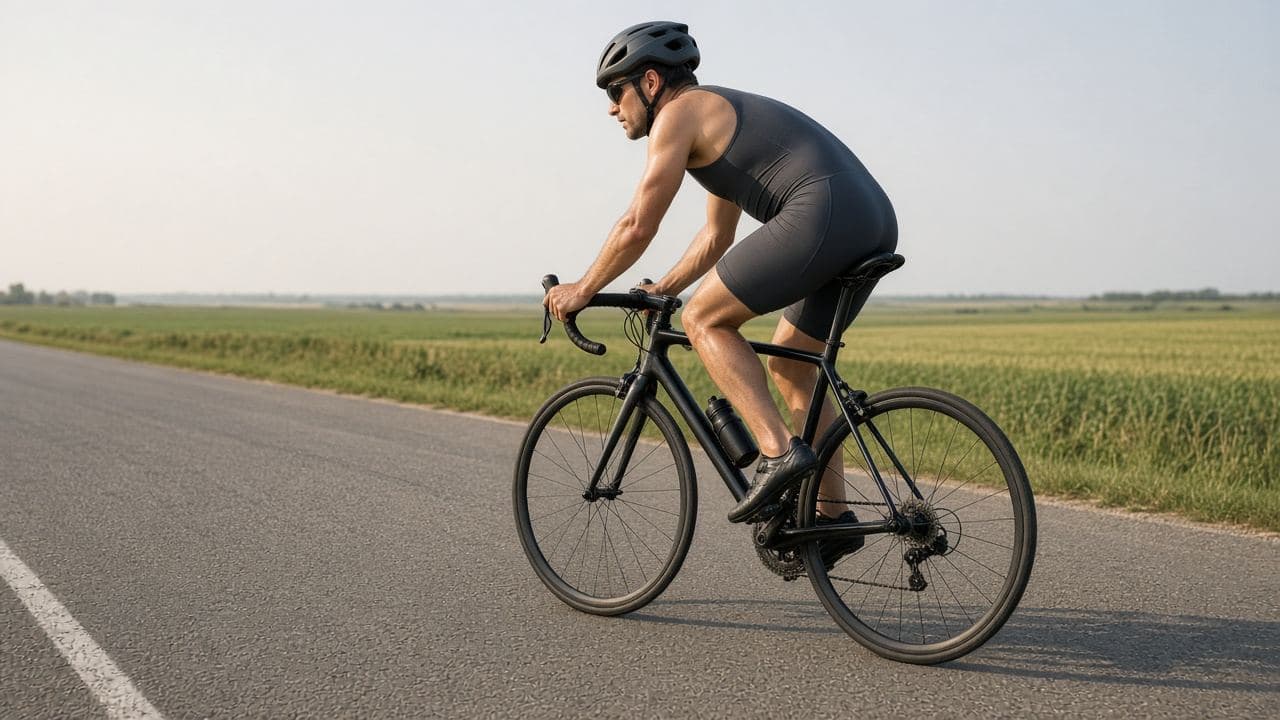
Fifty-five kilometres in, and flat triathlon bike pacing is about to fool you. The road is a grey straight line, a ditch on one side, wind that never quite becomes a headline. Your heart rate says 141. On the hilly Tuesday loop, 141 meant you were soft-pedaling a descent or waiting out the next pitch in zone 2.
Your quads disagree. They feel thick. A rider rolls past and your hand twitches toward a harder gear, because the number on your wrist looks cheap.
Leave the gear alone. Heart rate can sit in an easy band while your legs do uninterrupted work. On a course with no descents, a quiet chest is not a coupon for more watts.
Why does heart rate look easy on a flat triathlon bike?
Heart rate tracks the cardiovascular side of the job. It does not keep a separate ledger for your quads.
Justin Trolle, in a USA Triathlon piece on cadence, spells out the old belief. A lower cadence looks efficient because heart rate sits lower for the same power. That belief is why some lab tests still spin older adults at 50 to 60 rpm. Heart rate is one slice. Low cadence asks more strength from the legs. High cadence asks less muscle and more from the heart and lungs.
A flat race lets you live in the low-cadence version for two hours without a hill to expose it. Speed looks fine. Nothing forces a shift the way a 6 percent grade does. Heart rate never jumps. You grind a little, the screen stays polite, and the bill arrives in T2 as legs that will not turn over.
Joe Friel has a line I carry onto the run, and the invoice starts on the bike. On a long-course run you cannot trust heart rate, because fatigue has already hit the leg muscles harder than the heart. He told TRI247 the legs are dead regardless of the number. I see athletes book that debt on flat bike courses, the ones who never had to stand out of the saddle.
How hard should flat triathlon bike pacing be?
If you have a recent functional threshold power (FTP) test, pace with intensity factor. That is normalized power divided by FTP. An intensity factor of 0.75 means you are riding at 75 percent of threshold in the smoothed sense, not the number that flashes every second when the wind gusts.
Friel puts most age-groupers in these bands. Sprint rides land around 90 to 100 percent of FTP. Olympic rides land around 80 to 90. A 70.3 sits around 70 to 80. Ironman sits around 60 to 70. Newer athletes belong at the low end. So do older age groups. He says younger athletes who are actually contesting a podium may ride above the top of the range. A flat road and a sleepy heart rate do not promote you into that group.
He also wants the ride steady. Variability index is normalized power divided by average power. A gap under about 10 percent means you did not spend the first hour covering every pass. Those early surges are how people buy a fast bike split and walk later. Friel is blunt about the result. The athlete walks the run.
Here is the flat-course wrinkle athletes miss. On a pancake road your variability index falls toward 1.0 on its own, because you are not coasting the descents. A tidy index does not mean the quads got a discount. It means the power trace was smooth. Smooth and a notch too high is still a notch too high, for two hours, with no free rest.
I'd rather finish the bike eight beats under the heart rate I wrote on my wrist. A file that looks too easy in the chest beats a perfect zone that was really a long strength session.
The first 15 minutes lie in the other direction. You leave the water with heart rate already up. Let it fall. Soft-pedaling into a pack is a bad idea. Deciding the whole ride is easy the moment the number drops into the 140s is a worse one.
What cadence should you hold when the road never rises?
Trolle's range for non-draft triathlon is 90 to 95 rpm. Draft-legal bike legs sit higher, about 95 to 110, and that is a different race. If your event is a standard age-group 70.3, you are on the non-draft side.
Ninety to 95 will feel quick if you live at 80. You do not rebuild your pedal stroke on race morning. You watch for the pairing that matters.
Cadence sinks. Heart rate does not.
If you are under 85 rpm on flat road for a minute, shift down. I'd do that even when the chest feels fine, because the chest is the wrong witness. Speed might dip by half a kilometre an hour. That's fine. You moved load off the quads and onto a system that can still be there for the run.
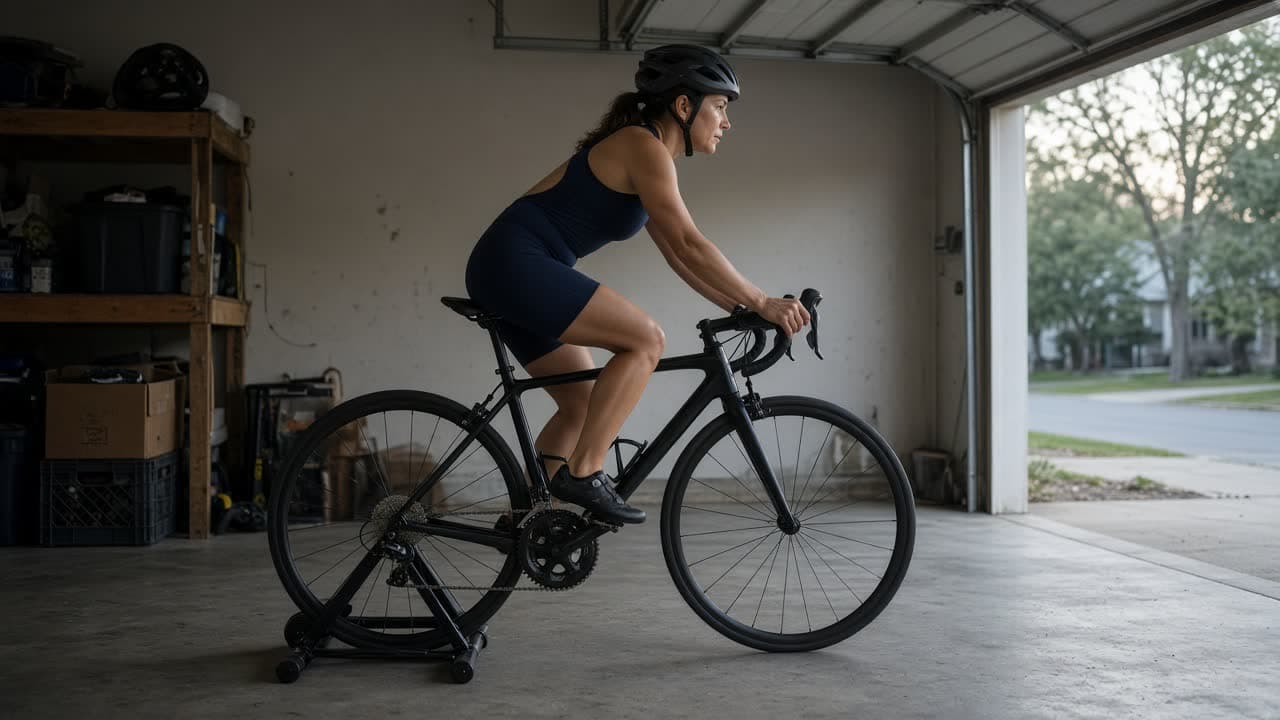
Heavy gear. Quiet heart. That pairing is the tell. A gear choice, not a vibe you interpret later.
What if your training rides are all hills?
Climbs make you strong. The descents hand the legs little vacations, and your heart-rate file barely records them. Match that same heart rate on a flat race and you have deleted the vacation. The chest looks familiar. The quads are in a session they have not rehearsed.
I see it in athletes who run well and ride whatever hill is out the door. The aerobic engine is ahead of their bike-specific durability. Heart rate stays in a zone they trust from winter base. The legs are what quit. Sometimes heart rate even drifts down as they slow, which is maddening if you think the chest is the boss of the day.
Fix the gap before race week. Put one steady endurance ride on flat roads or the trainer. For a 70.3 build, 60 to 90 minutes at race cadence is enough to teach the point. No hero surges. Hold the gear on purpose.
RacePal already shrinks the week when sleep, HRV, or a blocked day says you need less. Spend one remaining bike day on this steady ride. The app does not pick your gear at kilometre 55. That choice is the race.
Then rehearse the consequence. A short brick after one of those steady rides tells you whether the quads will actually run. If the first kilometre off the bike is a shuffle, the bike was the session to shorten.
A check every 15 minutes
You will not do math at kilometre 70. Use four glances.
- Heart rate is a ceiling once the sun is up. If it climbs while you hold the same gear in the heat, ease off. That is a different problem, and the heat pacing piece is the one to trust when the air is thick.
- Ask the quads, not the chest. Loud quads before halfway means one easier gear.
- Under 85 rpm on the flat, shift down. Do it before you argue with yourself.
- The rider who passed you is not your plan. Covering them in the first hour is the surge that walks you later.
Questions from the start line
Should I ride harder if my heart rate is low on a flat course?
Only if the legs are light too. Low heart rate plus heavy quads means your heart is not the limiter. Adding watts because the screen looks kind is how flat races turn into a walk by kilometre 12 of the run. If heart rate is low and the legs feel honestly easy, nudge power up a little and recheck in 10 minutes. Golden days exist. They feel easy in the muscles, not just on the graph.
What FTP percentage is sensible for a flat 70.3 bike?
Friel's age-group band for a 70.3 is about 70 to 80 percent of FTP as an intensity factor. Sit at the low end if this is an early long race, or if holding power for two and a half hours is new. A flat course does not add a bonus on top of that band. It removes the descents that used to hide a slightly hot pace.
What if I don't have a power meter?
Use cadence and the quads. Heart rate still matters as a veto when it runs high, which happens in heat, with caffeine, or when the swim was a fight. It is a poor invitation to ride harder on a flat road. Pick a gear you can spin near 90 rpm and hold it. If the gear gets heavy and the heart rate stays polite, you are already over the line that matters.